Naturopathic Medicine
Naturopathic Medicine
By Dr. Alain Frabotta - Integrative Chiropractor, Naturopathic & Functional Medicine Clinician, Educator, Sydney, Australia, integrating nutritional, lifestyle, and genomic medicine into modern clinical care.
What is Naturopathic Medicine?
Naturopathic Medicine is a holistic form of healthcare that emphasises the art, science, philosophy, and practice of diagnosing, treating, and preventing diseases. Naturopathic Medicine is practised by licensed or registered Naturopathic Practitioners or Naturopathic Doctors. [1]
While more Australians are looking for an integrative, holistic (Mind, Body & Spirit) approach to their healthcare, Naturopathic Medicine is one of the most popular forms of complementary medicine in Australia. [2]
What is a Naturopathic Practitioner or Naturopathic Doctor?
Naturopathic practitioners, also known as naturopathic doctors, provide personalised care tailored to each patient’s unique needs.
Naturopathic Practitioners or Naturopathic Doctors are trained in the treatment and prevention of disease using natural therapeutic modalities to encourage optimal health and well-being. [2]
Naturopathic Practitioners or Naturopathic Doctors integrate a biopsychosocial approach that considers your physical, mental, and social aspects of health with a range of evidence-based therapeutic practices and traditional healing systems that date back thousands of years. [2, 3, 4, 16]
Are Naturopathic Doctors Quacks?
In Australia, Naturopathic Practitioners are self-regulated. The registration of Naturopathic Practitioners remains unresolved due to fragmentation among professional associations and practitioners within the profession, as well as objections from certain healthcare lobbyists. [2]
The naturopathic profession includes more than 110,000 Naturopathic Practitioners and Naturopathic Doctors (NDs) practising in over 108 countries across all WHO Regions. [2]
In Europe, Naturopathic Practitioners and Naturopathic Doctors are found within specialised hospitals, while in North America, Naturopaths are classified as Primary Care Doctors who have completed four years of doctoral-level training at an accredited naturopathic medical school. [2]
Naturopathic Practitioners and Naturopathic Doctors are licensed to practise in 50% of Canadian provinces and 38% of all states/regions in the United States. [2]
The World Naturopathic Federation (WNF) promotes high-quality education and performance standards worldwide. [3]
In Australia, the minimum qualification to practise Naturopathic Medicine is an Advanced Diploma, although many practitioners hold a bachelor’s degree that requires four years of full-time study.
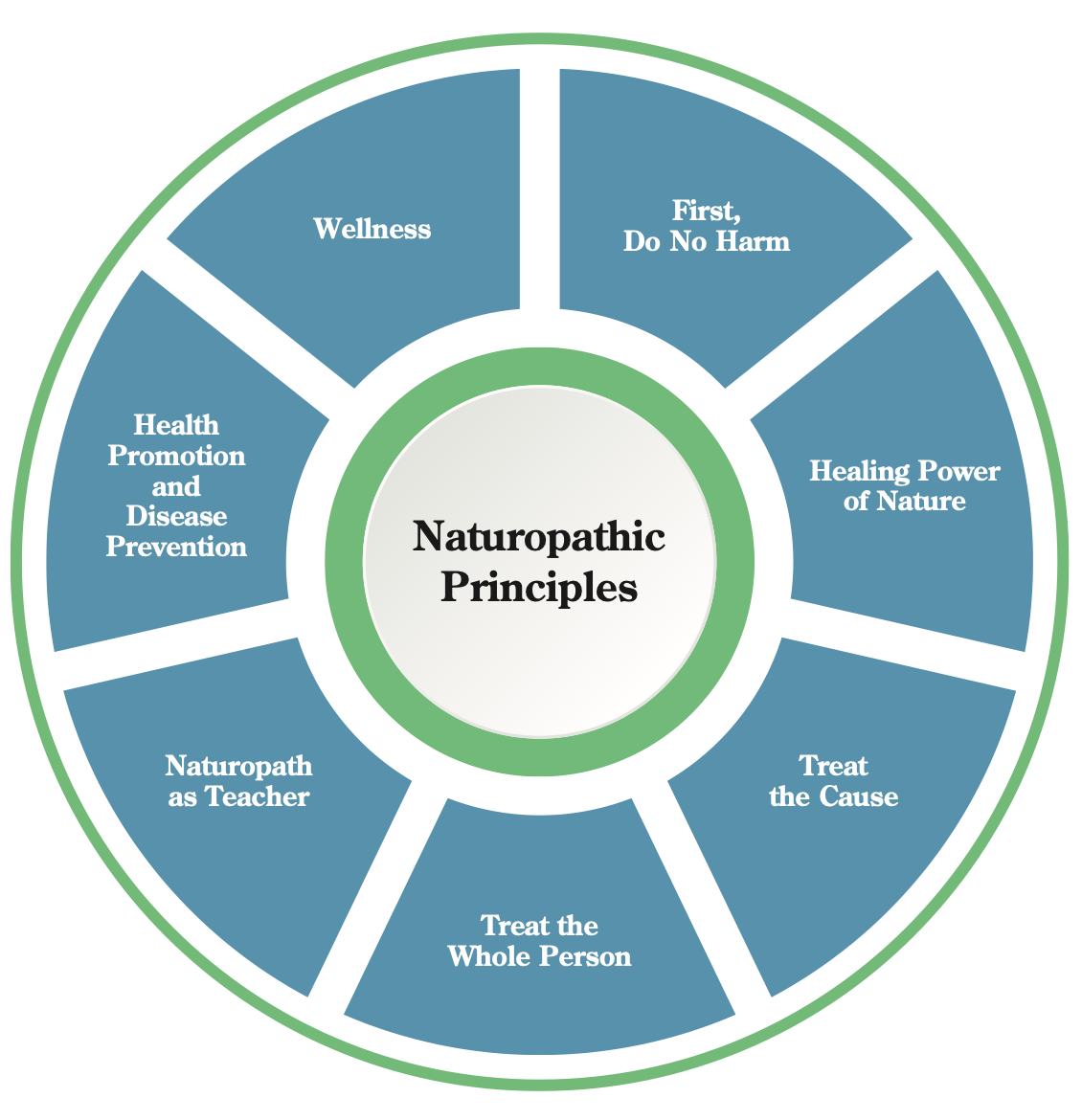
Principles of Naturopathic Medicine
The cornerstone of Naturopathic Medicine has always been to help people live in harmony with nature and to support the body's natural ability to heal itself.
Naturopathic Medicine has been practised for centuries and was among the first medical disciplines to be founded on the Hippocratic Oath.
To unite naturopaths in a fundamental approach to clinical care, the following principles were established: [4, 16]
Primum Non-Nocere – First Do No Harm: Naturopathic Doctors use therapeutic modalities, interventions and medicinal substances that minimise potential risks and side effects.
Conditions requiring the appropriate medical interventions may also be considered in the context of doing no harm, such as imaging, pharmaceutical agents or surgery.
Tolle Causam: Naturopathic Doctors’ endeavour to identify and treat the underlying causes rather than focusing on the patient's individual presenting symptoms.
Treat the Whole Person: Naturopathic Doctors consider the multifactorial interplay of environmental factors to determine health and disease.
The Naturopathic Doctor takes a biopsychosocial approach, considering the individual’s physical, mental, emotional, genetic, environmental, biological, psychosocial, and spiritual factors.
Vis Medicatrix Naturae: Naturopathic Medicine respects nature’s innate ability to maintain and restore health. The Naturopathic Doctor facilitates the most appropriate internal and external conditions to foster nature's healing process.
Docere: Naturopathic Doctors educate patients, encourage responsibility, and emphasise the importance of the doctor-patient relationship.
Prevention: Naturopathic Doctors promote optimal health —not just the absence of disease —by collaborating with the individual to provide appropriate interventions and lifestyle management strategies focused on disease prevention.
Naturopathic Practitioners and Naturopathic Doctors focus on disease prevention by assessing and mitigating the risk factors and susceptibility to disease using genetic profiling and nutrigenomics.
Naturopathic Medicine & Nutrigenomics
Nutrigenomics identifies the interactions between your genes, nutrition, exercise and the environment. It can provide a deeper insight into your health by identifying pathways involved in the development of chronic diseases, such as:
Inflammation
Methylation
Oxidative Stress
DNA Repair and Synthesis.
Why Should I See a Naturopath?
Naturopathic medicine may offer new perspectives and treatment options that could result in more effective outcomes.
According to research, Australians are looking for a more comprehensive, holistic, person-centred approach to their health and well-being. [15]
Naturopathic Practitioners and Naturopathic Doctors prioritise your needs by taking a patient-centred approach to understanding and investigating your health and well-being.
Most patients seek out naturopathic practitioners following unsatisfactory results or experiences with conventional medicine. [16]
Through providing personalised care tailored to each patient’s unique needs, a Naturopathic Practitioner and Naturopathic Doctor can help those with all forms of health and medical conditions, including:
Acute to Chronic care
Pediatric to Geriatric care
Physical to Psychological care.
Naturopathic Medicine is beneficial for people seeking:
To improve their quality of life
Disease prevention and health promotion strategies
A new perspective to address a disease or medical condition
To combine conventional and naturopathic treatments to minimise the side effects of drugs, surgery or medical treatments.
The Benefits of Visiting a Naturopath - How can a Naturopathic Practitioner help me?
What Conditions can Naturopaths Treat?
Australians are facing a crisis in developing life-long conditions and diseases, which can have serious social, economic, and quality-of-life consequences. [5]
According to the Australian Institute of Health and Welfare, chronic diseases and conditions are the primary causes of disability, illness, and death in Australia. [5]
Naturopathic Medicine can play an essential role in the treatment and prevention of a wide range of conditions, including:
Patients with musculoskeletal disorders and nerve pain [6,7, 16]
Diabetes Type II [8,16]
The prevention of cardiovascular disease [9], and treatment of cardiovascular disorders [6,16]
Depression and anxiety disorders [6,10,11,16]
The coronavirus disease 2019 (COVID-19) [12,16]
Digestive health [16]
Food intolerances and allergies [16]
Hormonal imbalances, or menstrual and menopausal conditions [16]
Polycystic ovarian syndrome [6,16]
Chronic low back pain [13,16]
Stress and fatigue [16]
Autism Spectrum Disorder (ASD) [14,16]
Autoimmune disorders [16]
Respiratory problems [16]
Headaches and migraines [16}
Skin conditions. [16]
Combining conventional and naturopathic medicines can be complicated, but with proper guidance, you can achieve remarkable results.
To achieve the best results and minimise interactions, it is essential to inform both your Naturopath and General Practitioner of any medications and supplements you are currently taking.
Safety and Risks of Naturopathic Medicine
All forms of healthcare involve some risk. The risks of Naturopathic Medicine are similar to those of many other healthcare professions with a broad scope of practice. [16]
Naturopathic Medicine is relatively safe because naturopaths focus on implementing low-risk interventions. [16]
Naturopathic Medicine is safe when performed by a qualified healthcare professional, as patient safety depends on educational standards and regulatory settings within jurisdictions. [16]
How to Choose the Best Naturopath in Sydney to Meet Your Needs?
While the majority of Naturopathic Practitioners adhere to a high standard of care, you will need to conduct your research to locate a naturopath with the appropriate credentials.
When choosing the best naturopath or an alternative medicine practitioner to meet your needs, make sure to check their credentials and confirm that they are a member of one of the following professional associations:
Australian Natural Therapists Association (ANTA)
Australian Register of Naturopaths and Herbalists (ARONAH)
Australian Traditional Medicine Society (ATMS)
Australian Naturopathic Practitioners Association (ANPA)
Naturopaths and Herbalists Association of Australia (NHAA)
It is critical to find a Naturopathic Practitioner who is highly qualified and experienced, and up to date with the latest scientific evidence.
You also want a Naturopath with whom you can establish a collaborative relationship, who is prepared to listen to your concerns and help you overcome the obstacles preventing you from reaching your health and well-being goals.
What to Expect in Consultation
Research shows that patients with chronic disease want their healthcare to take a more person-centred, holistic approach, providing a continuum of care that includes open communication, support with self-care strategies, and allowing the patient to be more involved in the decision-making process. [15]
DR ALAIN FRABOTTA practises a patient-centred care approach derived from the work of Carl Rogers (Psychologist). [15]
Patient-centred care is a systemic, whole-person approach that considers your needs, values, environment, and available resources. This includes: [1,15]
Developing a meaningful patient-practitioner relationship based on trust and open communication;
Encouraging and promoting your active participation, which includes a collaborative and shared decision-making process;
Providing specific health education;
Adopting a strengths-based approach that focuses on promoting optimum health rather than focusing on your illness or disease.
What to Expect in Your Initial Consultation
Standard medical practice with a naturopathic doctor / naturopathic practitioner includes a medical history and a physical examination, which may include:
Palpating or touching parts of your body, such as your abdomen, lymph glands, spine, and joints, to evaluate for normal function and detect abnormalities;
Examining your eyes, ears, nose, and throat, checking your blood pressure, and listening to your heart and lungs;
Examining your skin, hair, nails, and tongue;
Examining your spine and testing motor function and reflexes;
Requesting clinical or laboratory functional tests to identify the cause of your health problem.
Dr. Alain also considers your biological, psychological, and social factors, as well as your family history, genetic makeup, and environmental risk factors, to help you achieve your health and well-being goals.
Naturopathic Practitioners have Advanced Training in Behavioural & Lifestyle Medicine.
Well-qualified Naturopathic Practitioners / Naturopathic Doctors have received specific training to identify the social, cultural, cognitive, emotional, lifestyle, and environmental factors that impact your health and well-being.
Given that a large proportion of chronic diseases are potentially preventable through modifiable lifestyle changes, Naturopathic Medicine Practitioners are well-positioned to treat and manage various behavioural and psychological health concerns throughout all stages of a patient’s life. [16]
Naturopathic Physical Medicine
Naturopathic physical medicine is considered an essential aspect of naturopathic care. [16] Naturopathic philosophy views the structure of the body —including muscles, joints, posture, gait, and movement —as a core treatment modality used by naturopaths worldwide. [16]
Naturopaths/naturopathic doctors recognise a correlation between the patient's alignment and structure, the functioning of internal organs, and the patient's psychological state. [16]
Dr. Alain’s unique holistic and integrated approach to healthcare combines chiropractic and naturopathic physical medicine and rehabilitation to enhance and restore functional ability, achieve optimal performance and improve quality of life.
Does Medicare Australia cover Naturopathy?
What is Medicare? The Australian Government’s Department of Human Services administers Medicare, which offers refunds and reimbursement for medical services and expenses.
When you see a GP, Dentist, or Specialist, Medicare typically covers or subsidises a portion, which means you only have to pay a part of the charges.
Medicare does not subsidise naturopathy.
Does Your Health Insurance Cover Naturopathy?
While naturopathy itself isn't covered by health insurance in Australia, some of the many other services that are considered natural therapies may be covered under some policies.
Which natural therapies you can claim are determined by your health insurance policy. Most plans include 'extras' coverage, which refers to natural treatments such as physiotherapy, chiropractic, acupuncture and massage therapy.
Review your insurance policy to check whether it meets your needs.
Why are Medical Doctors Working with Integrative Medicine Naturopathic Practitioners?
Why are a growing number of medical doctors working collaboratively with naturopathic doctors?
Currently, the naturopathic profession in Australia is undergoing rapid professional growth and change. According to research, Naturopaths are an increasingly significant part of the Australian healthcare sector.
Australians are looking for a more comprehensive, holistic, person-centred approach to their health and well-being. [15]
According to the American Association of Naturopathic Physicians (AANP), the national professional association representing licensed naturopathic doctors, conventionally trained medical doctors (MDs) find that naturopathic doctors (NDs) have education, training, and an approach that improve patient care while expanding patients' treatment options.
According to a study of Australian GPs, many believe that the practice of integrative medicine begins with a foundation in good general practice. [16]
Further research reports that patients want their GPs to be informed about Alternative and Complementary Medicines [17], and that both patients and GPs see the value of a collaborative team-based model with the GP serving as the clinical leader, coordinator, and referrer to Alternative and Complementary Medicine Practitioners. [17-21]
Practising Integrative Medicine also improves patient satisfaction and the patient-practitioner relationship. [22, 23]
+ REFERENCES
[1] Wardle J, Oberg EB. The intersecting paradigms of naturopathic medicine and public health: opportunities for naturopathic medicine. J Altern Complement Med. Nov 2011;17(11):1079-84. doi:10.1089/acm.2010.0830
[2] Ooi SL, McLean L, Pak SC. Naturopathy in Australia: Where are we now? Where are we heading? Complement Ther Clin Pract. 2018;33:27-35. doi:10.1016/j.ctcp.2018.07.009
[3] Lloyd I. Overview of the World Naturopathic Federation (WNF). vol 30. Cambridge Publishing; 2018:58–61.
[4] Logan AC, Goldenberg JZ, Guiltinan J, Seely D, Katz DL. North American naturopathic medicine in the 21st century: Time for a seventh guiding principle - Scientia Critica. Explore (NY). Sep 2018;14(5):367-372. doi:10.1016/j.explore.2018.03.009
[5] Australian Institute of Health and Welfare. Chronic disease Overview - Australian Institute of Health and Welfare. Australian Institute of Health and Welfare. Published 2021. https://www.aihw.gov.au/reports-data/health-conditions-disability-deaths/chronic-disease/overview
[6] Myers SP, Vigar V. The State of the Evidence for Whole-System, Multi-Modality Naturopathic Medicine: A Systematic Scoping Review. J Altern Complement Med. Feb 2019;25(2):141-168. doi:10.1089/acm.2018.0340
[7] Romeyke T, Nohammer E, Scheuer HC, Stummer H. Integration of naturopathic medicine into acute inpatient care: An approach for patient-centred medicine under diagnosis-related groups. Complement Ther Clin Pract. Aug 2017;28:9-17. doi:10.1016/j.ctcp.2017.04.004
[8] Oberg EB, Bradley RD, Allen J, McCrory MA. CAM: naturopathic dietary interventions for patients with type 2 diabetes. Complement Ther Clin Pract. Aug 2011;17(3):157-61. doi:10.1016/j.ctcp.2011.02.007
[9] Seely D, Szczurko O, Cooley K, et al. Naturopathic medicine for the prevention of cardiovascular disease: a randomized clinical trial. CMAJ. Jun 11 2013;185(9):E409-16. doi:10.1503/cmaj.120567
[10] Sarris J, McIntyre E, Camfield DA. Plant-based medicines for anxiety disorders, Part 1: a review of preclinical studies. CNS Drugs. Mar 2013;27(3):207-19. doi:10.1007/s40263-013-0044-3
[11] Sarris J, Moylan S, Camfield DA, et al. Complementary medicine, exercise, meditation, diet, and lifestyle modification for anxiety disorders: a review of current evidence. Evid Based Complement Alternat Med. 2012;2012:809653. doi:10.1155/2012/809653
[12] Barber MS, Barrett R, Bradley RD, Walker E. A naturopathic treatment approach for mild and moderate COVID-19: A retrospective chart review. Complement Ther Med. Dec 2021;63:102788. doi:10.1016/j.ctim.2021.102788
[13] Herman PM, Szczurko O, Cooley K, Mills EJ. Cost-effectiveness of naturopathic care for chronic low back pain. Altern Ther Health Med. Mar-Apr 2008;14(2):32-9.
[14] Hofer J, Hoffmann F, Kamp-Becker I, et al. Complementary and alternative medicine use in adults with autism spectrum disorder in Germany: results from a multi-center survey. BMC Psychiatry. Feb 1 2019;19(1):53. doi:10.1186/s12888-019-2043-5
[15] Foley H, Steel A. Patient perceptions of clinical care in complementary medicine: A systematic review of the consultation experience. Patient Educ Couns. Feb 2017;100(2):212-223. doi:10.1016/j.pec.2016.09.015
[16] LLOYD, I., STEEL, A. & WARDLE, J. (eds.) 2021. Naturopathy, Practice, Effectiveness, Economics & Safety, Toronto, Ontario: World Naturopathic Federation.
[17] Ee C, Templeman K, Forth A, et al. Integrative medicine in general practice in Australia: A mixed-methods study exploring education pathways and training needs. Glob Adv Health Med 2021;10. doi: (https://doi.org/10.1177/21649561211037594)
[18] Jong MC, van de Vijver L, Busch M, Fritsma J, Seldenrijk R. Integration of complementary and alternative medicine in primary care: What do patients want? Patient Educ Couns 2012;89(3):417–22.
[19] Ee C, Templeman K, Grant S, et al. Informing the model of care for an academic integrative health care center: A qualitative study of primary care stakeholder views. J Altern Complement Med. 2020;26(4):300–15. doi: 310.1089/acm.2019.0321.
[20] Ee C, Templeman K, Grant S, Avard N, de Manincor M, Hunter J. Informing the model of care for an academic integrative healthcare centre: A qualitative study exploring healthcare consumer perspectives. BMC Complement Med Ther 2020;20(1):58. doi: 10.1186/s12906-12019-12801-12904.
[21] Hunter J, Corcoran K, Phelps K, Leeder S. The challenges of establishing an integrative medicine primary care clinic in Sydney, Australia. J Altern Complement Med 2012;18(11):1008–13. doi: 1010.1089/acm.2011.0392.
[22] Gannotta R, Malik S, Chan AY, Urgun K, Hsu F, Vadera S. Integrative medicine as a vital component of patient care. Cureus 2018;10(8):e3098.
[23] Crocker RL, Grizzle AJ, Hurwitz JT, et al. Integrative medicine primary care: assessing the practice model through patients' experiences. BMC Complementary Altern Med 2017;17(1):490–90.